Information
Welcome to the Frequently Asked Questions page of Ntuba ministries. Here, we aim to provide clear and comprehensive answers to your questions of faith and our ministry. Whether you're a beginner, a student, or simply a member of the general public interested in religion, we hope these FAQs will be helpful.

SEND QUESTIONS AND COMMENTS TO
nministries67@aol.com
Frequently asked questions
We understand that you may have questions about NTUBA MINISTRIES . Our approach is rooted in providing accessible information with a tone that is formal, informal, friendly, and academic all at once, ensuring that everyone can understand and find value in our responses.
Are you a church?
We are a Christian religious ministry. We are dedicated to providing information and resources about the Christian faith .
What's the one thing you want people to understand or take away after reading these FAQs?
We hope these FAQs provide answers to your questions of faith and a better understanding of our ministry's purpose.
Are you an evangelistic ministry?
Yes, Ntuba ministries is a Global missionary - evangelistic ministry.
Who are you trying to reach with these FAQs?
These FAQs are aimed at beginners, students, and the general public interested in Christianity , providing accessible and helpful information.
Are you denominational?
Ntuba ministries is not denominational. We seek to serve all people, regardless of denominational affiliation.
What is the tone you want to use in the FAQs?
Our tone is all of formal, informal, friendly, academic, ensuring clear and accessible information for all.
Is Tithing a New Testament Compulsory Command? – A Balanced Ministry Response

Is Tithing a New Testament Compulsory Command? – A Balanced Ministry Response
In Rev. Dr. Ntuba Akwo Thompson’s ministry, questions about Christian giving are approached with Biblical clarity and pastoral wisdom. On the topic of whether tithing is a compulsory command for New Testament believers, he offers a nuanced and scripturally grounded perspective.
1. Tithing in the Old Testament
Tithing was a clear requirement under the Old Covenant. It was part of the law given to Israel, connected to the temple system, the Levitical priesthood, and the national life of God’s people. It served important purposes—supporting the priests, caring for the poor, and sustaining worship.
2. Jesus’ Teaching on Tithing
Christ did not forbid tithing. In Matthew 23:23, He acknowledged it but emphasized that it was not among the “weightier matters” of the law. His focus was on justice, mercy, and faithfulness. This shows that while tithing existed, Jesus did not elevate it as a central command for His followers in the coming era of grace.
3. The New Testament Emphasis: Grace, Generosity, and Willing Giving
Rev. Dr. Ntuba Akwo Thompson highlights that the New Testament operates under a different dispensation—the dispensation of grace, not the Mosaic law. In this new covenant:
-
Giving is voluntary, not compulsory.
-
Believers are encouraged to give cheerfully, willingly, and according to their ability (2 Corinthians 9:6–7).
-
The focus is on supporting the work of God, blessing the body of Christ, and helping neighbors in need.
-
The heart and motive matter more than a fixed percentage.
4. Christians Are Still Called to Give
While the New Testament does not command tithing as a law, it strongly calls believers to be generous. Rev. Dr. Ntuba Akwo teaches that:
-
Giving is an act of worship.
-
It sustains ministry, missions, and the needs of the church.
-
It reflects love for God and compassion for others.
-
It is a privilege, not a burden.
5. Conclusion
Tithing is not a compulsory New Testament command, but giving remains a vital Christian responsibility. The spirit of giving under grace goes beyond legal requirements—it flows from gratitude, love, and a desire to advance God’s kingdom.
Rev. Dr. Ntuba Akwo Thompson encourages believers to give faithfully, joyfully, and purposefully, supporting the work of God and being a blessing to the community.
Women as Pastors or Bishops: A Hermeneutical Examination Through the Principles of Mention
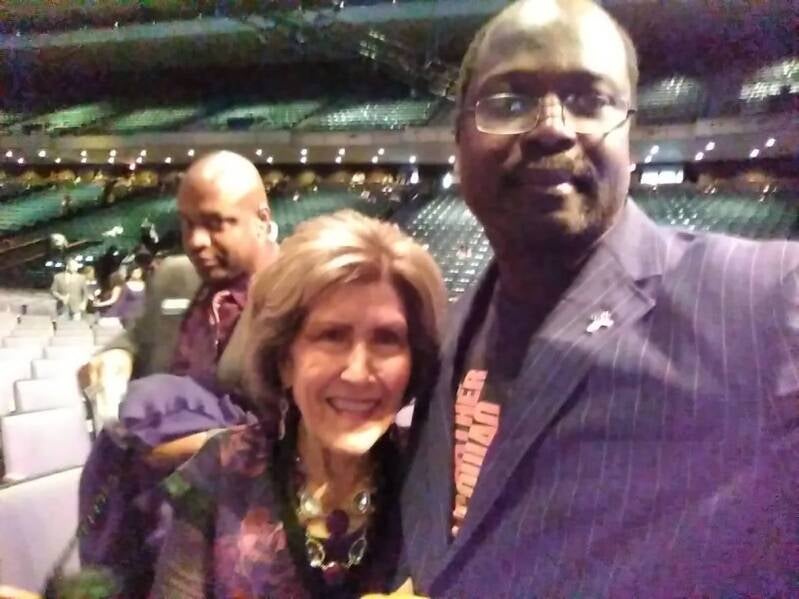
OSTEEN DID NOT ASSUME THE HEADSHIP OF LAKE WOOD CHURCH AFTER THE DEATH OF HER BISHOP OR PASTOR HUSBAND BUT ALLOWED THE CHURCH APPOINT A MALE BISHOP OR PASTOR TO TAKE OVER THE LEADERSHIP AND HEADSHIP OF THE BODY AS UNDER SHEPARD UNDER CHRIST .
Women as Pastors or Bishops: A Hermeneutical Examination Through the Principles of Mention
By Rev. Dr. Ntuba Akwo Thompson
The question of whether women may serve as pastors or bishops—heads of the local church—has long been a subject of debate within Christian theology. To approach this issue faithfully, Rev. Dr. Ntuba Akwo Thompson applies the hermeneutical principles of first mention, progressive mention, and terminal mention, allowing Scripture to interpret Scripture and reveal God’s consistent pattern for ecclesiastical leadership.
1. First Mention: The Old Testament Pattern of Priestly Leadership
In the Old Testament, God established a clear priestly order. No woman was ever appointed as a priest, Levite, or high priest in Israel’s worship structure.
-
Exodus 28:1 – God commands Moses to appoint Aaron and his sons as priests.
-
Numbers 3:10 – The priesthood is explicitly limited to males from the tribe of Levi.
-
Malachi 2:7 – The priest is described as the “messenger of the Lord,” a role never assigned to women in the Old Covenant.
This first mention establishes a foundational pattern: spiritual headship in the covenant community was male, not as a statement of superiority, but as part of God’s ordered design.
2. Progressive Mention: Ministry Roles in the New Testament
In the New Testament, women played significant and honorable roles—teaching, prophesying, serving, and witnessing. Rev. Dr. Ntuba Akwo acknowledges these contributions while noting that none of these roles placed women as heads of the local church.
Women in Ministry (Affirmed by Scripture)
-
Priscilla taught Apollos alongside her husband (Acts 18:26).
-
Phoebe served as a diakonos (servant/deaconess) of the church at Cenchrea (Romans 16:1).
-
Philip’s daughters prophesied (Acts 21:9).
-
Women were the first witnesses of the resurrection (Matthew 28:1–10).
These examples show that women were active, empowered, and essential in ministry. However, none were described as pastors, bishops, or elders—roles involving governing authority over the church.
3. Terminal Mention: Apostolic Instructions for Church Leadership
The clearest New Testament teachings on church leadership come from Paul’s pastoral epistles—1 Timothy and Titus. These letters outline qualifications for bishops/elders and deacons.
A. Qualifications for Bishops/Elders (Pastors)
Paul’s instructions consistently use male‑specific language:
-
“A bishop then must be the husband of one wife” (1 Timothy 3:2).
-
“Let the elders who rule well be counted worthy of double honor” (1 Timothy 5:17).
-
“Ordain elders in every city… if any be blameless, the husband of one wife” (Titus 1:5–6).
The phrase “husband of one wife” (Greek: aner mias gynaikos) is unambiguously male. This is not cultural bias—it is apostolic instruction for church order.
B. Teaching and Authority in the Church
Paul further clarifies roles in congregational leadership:
-
“I do not permit a woman to teach or to exercise authority over a man” (1 Timothy 2:12).
-
“Adam was formed first, then Eve” (1 Timothy 2:13).
Paul grounds his teaching not in culture, but in creation order, making it a theological principle, not a temporary restriction.
C. Deacons vs. Bishops
While women served as deaconesses (Romans 16:1), the qualifications for bishops/elders are distinct and more restrictive. Rev. Dr. Ntuba Akwo notes that the bishop’s qualifications do not apply to women, based on the explicit language and apostolic pattern.
4. Christ’s Ecclesiastical Order
Christ is the Head of the Church (Colossians 1:18), and He established an order within His body. He chose twelve male apostles—not because women lacked value, but because of divine order and symbolic continuity with the twelve patriarchs.
Even though all apostles were evangelists, Scripture does not say they were all pastors. Yet the pattern of leadership remains consistent: headship roles were male.
5. Women in Ministry—Affirmed but Not Assigned Headship
Rev. Dr. Ntuba Akwo emphasizes that sex is not the most important issue. Women are gifted, called, and empowered by God. They:
-
taught (Acts 18:26)
-
prophesied (Acts 21:9)
-
served (Romans 16:1)
-
labored in the gospel (Philippians 4:3)
But nowhere in Scripture—Old Testament, New Testament, or patriarchal history—does God appoint a woman as:
-
priest
-
apostle with governing authority
-
elder
-
bishop
-
pastor of a local congregation
The absence is not accidental; it is theological.
6. Conclusion: Faithfulness to Scripture and God’s Order
Rev. Dr. Ntuba Akwo Thompson concludes that:
-
Women are vital to ministry.
-
Women can teach, evangelize, prophesy, and serve.
-
Women are honored by God and indispensable to the church.
-
But Scripture does not authorize women to serve as bishops or pastors—the governing heads of Christ’s church.
This position is not rooted in culture, prejudice, or tradition, but in a consistent biblical pattern revealed through:
-
First Mention (Old Testament priesthood)
-
Progressive Mention (New Testament ministry roles)
-
Terminal Mention (Pastoral epistles and church order)
The church must honor both the gifts of women and the order established by Christ, who remains the Shepherd and Head of His body.
HOMOSEXUAL QUESTION ;A Pastoral Reflection on Ministry, Love, and Biblical Teaching:

**HOMOSEXUAL QUESTION ;A Pastoral Reflection on Ministry, Love, and Biblical Teaching:
Rev. Dr. Ntuba Akwo Thompson’s Engagement With the LGBTQ+ Community**
Rev. Dr. Ntuba Akwo Thompson’s ministry has long emphasized community health, compassion, and Christ‑centered love. His work among LGBTQ+ individuals—attending their events, addressing social and health concerns, and listening to their experiences—reflects a commitment to love one’s neighbor and to approach all people with dignity and respect.
1. Ministry Rooted in Christlike Love
In his outreach, Rev. Dr. Thompson often asks members of the LGBTQ+ community how they believe Jesus views them. Many respond with themes deeply rooted in Scripture:
-
“Let the one without sin cast the first stone.” (John 8:7) A reminder that judgment belongs to God, not to human beings.
-
“Jesus loves us as we are.” A reflection of the biblical truth that Christ invites all people to come to Him: “Come to me, all you who labor and are heavy laden…” (Matthew 11:28)
-
“Jesus loves us.” A central Christian conviction: “For God so loved the world…” (John 3:16)
These responses have shaped Rev. Dr. Thompson’s pastoral approach: lead with love, listen with humility, and speak truth with compassion.
2. Biblical Texts Historically Interpreted on Same‑Sex Behavior
Rev. Dr. Thompson also feels compelled to share what Scripture says, as traditionally interpreted by many Christian communities. Key passages often cited include:
Old Testament References
-
Genesis 19 – The story of Sodom, historically interpreted by many as condemning same‑sex acts, though modern scholars also emphasize themes of violence and inhospitality.
-
Leviticus 18:22; 20:13 – Laws within the Holiness Code describing same‑sex acts as prohibited for ancient Israel.
New Testament References
-
Romans 1:26–27 – Paul describes same‑sex acts as contrary to God’s design within his larger argument about humanity’s need for grace.
-
1 Corinthians 6:9–10 – Lists behaviors considered sinful, including “arsenokoitai,” a debated Greek term historically linked to same‑sex acts, alongside greed, drunkenness, and other behaviors.
-
1 Timothy 1:9–10 – Includes similar terminology in a list of behaviors contrary to sound doctrine.
Historically, many Christian traditions have interpreted these passages as prohibiting same‑sex sexual behavior. Rev. Dr. Thompson’s teaching reflects this traditional reading while emphasizing that these texts address actions, not the worth or dignity of individuals.
3. “Truth in Love”: A Pastoral Tension
Rev. Dr. Thompson stresses that sharing biblical teaching must never become an act of condemnation. Scripture itself warns against self‑righteousness:
-
“Judge not, that you be not judged.” (Matthew 7:1)
-
“Speak the truth in love.” (Ephesians 4:15)
He teaches that Christian truth and Christian love are inseparable. To speak truth without love becomes cruelty; to offer love without truth becomes sentimentality. His ministry seeks to hold both together.
4. Historical Examples of Christian Engagement With Sexual Ethics
Throughout Christian history, attitudes toward sexuality have varied across cultures and eras:
-
Early Church Fathers such as Augustine and Chrysostom wrote strongly against same‑sex acts, reflecting the moral norms of their time.
-
Medieval Christianity maintained similar views, often linking sexual ethics to broader concerns about social order.
-
Modern Christian denominations differ widely:
-
Some maintain traditional teachings on sexual behavior.
-
Others reinterpret biblical texts in light of historical context, linguistic studies, and contemporary understandings of sexuality.
-
Rev. Dr. Thompson’s position aligns with the traditional, historically dominant interpretation, while his pastoral practice emphasizes compassion, presence, and service.
5. Community Health, Compassion, and Christ’s Example
His work in population and community health brings him into contact with marginalized groups, including LGBTQ+ individuals who often face:
-
Higher rates of mental health challenges
-
Increased risk of certain health conditions
-
Social stigma and discrimination
Following Christ’s example, he seeks to serve rather than condemn, addressing real human needs with empathy.
Jesus consistently ministered to those on society’s margins—tax collectors, Samaritans, the sick, the outcast. Rev. Dr. Thompson sees this as a model for modern ministry.
6. Conclusion: Love Without Compromise, Truth Without Cruelty
Rev. Dr. Ntuba Akwo Thompson’s approach can be summarized in three commitments:
-
Love first – because Christ loved first.
-
Listen deeply – because every person bears God’s image.
-
Teach Scripture faithfully – because conviction must be paired with compassion.
He believes that showing love is not the same as approving every action, and that sharing biblical teaching is not the same as judging a person’s worth. His ministry seeks to walk this delicate path with humility, courage, and grace.
Delving Deeper
Still have questions? We're here to help. Contact us for further information and support. We're committed to helping you understand and grow in your faith. nministries67@aol.com
Create Your Own Website With Webador